Thursday, August 22, 2019

A Very Beautiful Poem By Mother Teresa

People are often unreasonable, illogical, and self centered;
forgive them anyway.

If you are kind, People may accuse you of selfish, ulterior motives;
Be kind anyway.

If you are successful, you will win some false friends and some true enemies; succeed anyway.

If you are honest and frank, people may cheat you;
Be honest and frank anyway.

What you spend years building, someone could destroy overnight;
Build anyway.

If you find serenity and happiness, they may be jealous;
Be happy anyway.

The good you do today, people will often forget tomorrow;
Do good anyway.

Give the world the best you have, at it may never be enough;
Give the world the best you've anyway.

You see, in the final analysis it is between you and God;
It was never between you and them anyway. 

Friday, August 16, 2019

Largest Empires In Human History By Land Area

At the height of its dominance, the British empire covered an astonishing 13 million square miles.


The sun is always shining, the old saying goes, in one or more territories of the vast British Empire. However, it is not the only empire to leave its mark on history - a mark that reaches every corner of the world.
Definitions of an empire vary widely. An empire could be made up of one state, multiple states, or groups of countries. Empires are formed from ethnic, cultural, national, and religious components. As such, determining which aspect to use to measure an empire is problematic. This is because the mentioned factors often overlap one another. However, the following largest Empires were determined following a methodology strictly based on total land area.

10. Portuguese Empire, Early 19th Century, 4.02 million square miles

By 1815, the Portuguese Empire was four million square miles. It covered the regions known today as Brazil, Mozambique, Zambia, and Zimbabwe, as well as other regions in Africa. It is notable for being one of the first empires in history to cover such great lengths. Throughout the 20th century, pieces of the empire began to gain independence. It was officially dissolved when Portugal gave Macau to China in 1999.

9. Yuan, 1271-1368, 4.25 million square miles

The Yuan Empire, established by Kublai Khan Clan, succeeded the Mongol Empire to become an imperial Chinese dynasty. It covered an area of 4.2 million square miles. The Pax Mongolica system promoted commercial, cultural, and scientific growth. In this era, Yuan was at peace with the Khanates of Western Mongolia.

8. Abbasid, 9th Century CE, 4.29 million square miles

Abbasid was part of the vast and powerful Arab Empire. In 750 AD, Abbasid overthrew the Umayyad caliphate (a caliphate is a region under the command of a Muslim ruler). It covered parts of what would be recognized today as the Middle East, Central Asia, Southern Europe, and Northern Africa. The empire takes its name from Abbas ibn Abd al-Muttalib, who was the youngest uncle of the prophet Muhammad.

7. Umayyad, 651-750, 4.29 million square miles

The Umayyad Empire stretched from Syria, Damascus, Maghreb, Iberian Peninsula, Sindh, Punjab, Transoxiana, and Caucasus. All these territories had a combined population of 62 million people (which was 29% of the world’s population) and covered an area of 4.29 million square miles. The Empire was secular.

6. Second French Empire, 1534-1980, 4.44 million square miles

France underwent tremendous growth and development between the First and Second Word Wars. In the early 1920s, French defeated Germany in the First World War with the help of the Allied powers. By 1924, means of agricultural and industrial production had developed extensively. The Great Depression hit France in 1931. After 1931, high levels of unemployment and political unrest became a national problem. The French Empire, which had once extended from Europe to Africa to North America to Asia, began to decolonize in the mid 20th century.

5. Spanish Empire, 1492-1975, 5.29 million square miles

The Spanish Empire was composed of colonies and territories of the Spanish Monarch distributed throughout the Americas, Asia, Africa, Oceania, the Greater Antilles, South America, and some Pacific Ocean Archipelagos such as the Philippines. The Spanish empire dominated the oceans and European battles, as it was able to partake in trade in the Atlantic, Indian and Pacific sea. Despite its size, the Empire was in constant fights with powers over territories, trade, or religion.

4. Qing Dynasty, 1644-1917, 5.68 million square miles

The Qing Dynasty was the last imperial rule in China. Under the leadership of Kangxi Emperor, the Empire was a world power thanks to its social, economic, and political means. At the time of the eighteenth century, the Qing Empire administered over 5 million square miles. Yongzheng converted Qing to an early modern state promoting Confucian orthodoxy and banning Christianity in 1723.

3. Russian Empire, 1721-1917, 8.8 million square miles

The Russia Empire was made up of Moscow, St. Petersburg, Russian Poland, the central European Russian regions, the Baltic cities, regions along lower Dnepr and Don rivers and the Southern Ural Mountains, covering an area of 8.8 million square miles. In 1861, the law allowed peasants to own the lands they were working on for their use, thus freeing them from their dependency on landowners. The farmers constituted four-fifths of the rural population, and the proclamation made Russia the largest cereal producer and exporter in the world.

2. Mongol Empire, 1206-1368, 9.27 million square miles

By the 1280s the Mongol Empire was the largest contiguous empire in the history of humankind covering an area of 9.27 million square miles. The empire covered the steppes of Central Asia, then stretched to the Sea of Japan, Central Europe, then finally westwards to Levant and Arabia. It extended northwards to Siberia, and southwards and eastwards to Indochina, Iranian Plateau, and the Indian subcontinent. The Mongol Empire started as groups of nomadic tribes united by Genghis Khan in 1206.

1. British Empire, 1497-1997, 13.71 million square miles

The British Empire was formed up of protectorates, colonies, dominions, mandates, and territories. By 1920s, at the height of its dominance, the whole empire covered more than 13 million square miles (24% of the earth’s area) which included territories in every continent. The self-governing nations of the Union of South Africa, Australia, Canada, New Zealand, and other colonies such as Kenya, Nigeria, India, Egypt, Sudan, Burma, and Singapore were all ruled from London. The British naval power controlled most of the key maritime trade routes and enjoyed unchallenged sea power. It also controlled many access routes to Asia and Latin America

Largest Empires In Human History By Land Area

RankEmpire NameYear of Peak sizeSize (Millions of Square Miles)
1British Empire192013.71
2Mongol Empire12709.27
3Russian Empire18958.8
4Qing Dynasty17905.68
5Spanish Empire18105.29
6Second French Empire19204.44
7Abbasid Caliphate7504.29
8Umayyad Caliphate7204.29
9Yuan Dynasty13104.25
10Portuguese Empire18154.02
11Xiongu Empire176 BCE3.47
12Empire of Brazil18893.22
13Eastern Han Dynasty1002.51
14Ming Dynasty14502.51
15Rashidun Caliphate14502.47
16Gokturk Khaganate5572.32
17Golden Horde Khanate13102.32
18Western Han Dynasty50 BCE2.32
19Achaemenid Empire500 BCE2.12
20Tang Dynasty7152.08
21Macedonian Empire323 BCE2.01
22Ottoman Empire16832.01
23Maurya Empire250 BCE1.93
24Roman Empire1171.93
25Tibetan Empire8001.78

Tuesday, August 13, 2019

What Is The Smallest Ocean?

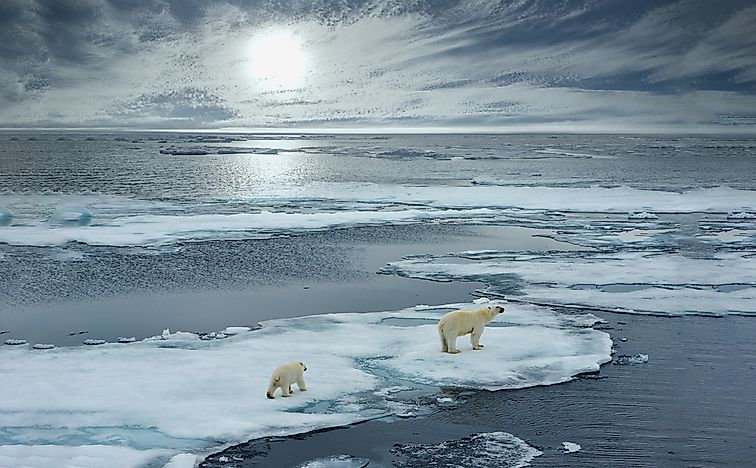
The Arctic Ocean is the world's smallest ocean measuring in at only 5 million square miles.


The Arctic Ocean is the world's smallest ocean measuring in at only 5 million square miles. It is also the shallowest among the five major oceans on our planet. Part of the Arctic Ocean is covered by sea ice throughout the year and almost entirely in winter. 

Geography of the Arctic Ocean

The Arctic Ocean is located almost entirely in the geographic North Pole at the center of the northern hemisphere. The arctic is spread over an area of 5 million square miles with a coastline of about 28,200 miles. It is surrounded by land masses of Europe, Asia, North America, Greenland, and several other Arctic islands. The Arctic Ocean joins the Pacific Ocean through the Bering Strait. The Arctic’s connection to the Atlantic Ocean is through Greenland Sea and Labrador Sea. Russia, Norway, Iceland, Greenland, Canada, and the United States border the Arctic Ocean all having ports and harbors along the coastline.
The Arctic Ocean arctic shelves include the Russian continental shelf and the Canadian Arctic shelf among other shelves. The Russian continental shelf is the largest and is made of three smaller shelves; Siberian Shelf, Chukchi Sea Shelf and the Barents Shelf.
The North Polar Basin is divided underwater into two basins, the Eurasian Basin and the Amerasian Basin, by the Lomonosov Ridge. The mean depth of the Arctic Ocean approximately, 3,400 feet with the deepest point being the Litke Deep in the Eurasian Basin with a depth of 17,880 feet.

Climate, Animals and Plant Life of the Arctic Ocean

The Arctic Ocean is enclosed in a polar climate. Winters are extremely cold with polar nights while summers are characterized with midnight sun. Cyclones are frequent during summer and may result in rain and snow. On the surface of the Arctic Ocean, the temperatures are fairly constant at about -1.8 °C.
Animals found in the Arctic Ocean include fish, seals walruses, whales, Lion's mane jellyfish, and the banded gunnel. Little plant life is present except for the phytoplankton. The natural resources of the Arctic Ocean include petroleum, natural gas, placers, manganese nodules, and aggregates of sand and gravel.

Environmental Concerns

Over the years, the arctic ice has been thinning. The thinning leads to a fall in the earth’s mean albedo possibly resulting in global warming. It is feared that by 2040, the arctic may be free of ice for the first time in history. A rise in temperatures in the arctic could cause huge amounts of melt water to get into the North Atlantic leading to a disruption of the ocean currents. These disruptions may cause severe changes of weather on the planet.
Arctic ice serves to stabilize methane deposits near the shoreline. With the continuous thinning of the arctic ice, it is feared that Clathrate, a chemical substance made up of a lattice which traps and contains the gas, will be broken down causing release of methane into the atmosphere. Large amounts of methane in the atmosphere are dangerous are they could cause further warming making marine life to become extinct.

Monday, August 12, 2019

The Largest Lakes In The World By Volume


    A lake is defined as an area filled with water and surrounded by land, except for any inlets or outlets such as a river or stream. There are 11 major types of lakes that can be classified according to their formation and other characteristics. Lakes can also be ranked by volume or surface area. While a lake's surface area is relatively constant, its volume may change several times during the year. Therefore, since the volume of a lake changes, estimates of its volume can vary depending on the source and time of measurement. Some of the largest lakes in the world by volume are highlighted below.

    The Four Largest Lakes by Volume

    Caspian Sea

    The Caspian Sea has been classified as both a lake and a sea. However, it is the largest inland body of water in the world, and can be classified as the world’s largest lake in terms of both surface area and volume. The Caspian Sea is located between Asia and Europe, and covers an area of approximately 371,000 km2. It has an average volume of 78,200 km3, accounting for about 40% of the world’s lacustrine waters. The lake is fed by more than 130 rivers, the largest being the Volta River. The volume of water in the Caspian Sea is almost 3.5 times more than all five of the Great Lakes of North America combined.

    Lake Baikal

    Lake Baikal is situated in southern Siberia and is the world’s largest freshwater lake, accounting for about 22% of all fresh surface water in the world. With a volume of 23,615.39 km3, it is the world’s second-largest lake by volume. Lake Baikal is also the deepest lake in the world, with a maximum depth of 1,642 m. In terms of surface area, it ranks as the seventh-largest in the world, covering an area of approximately 31,722 km2.

    Lake Tanganyika

    Lake Tanganyika is a freshwater lake with a volume of 18,900 km3, ranking as the second-largest freshwater lake in the world by volume, after Lake Baikal. It is one of the African Great Lakes and is located within four countries, namely Zambia, Burundi, the Democratic Republic of the Congo (DRC), and Tanzania. Lake Tanganyika is also the second oldest and the second deepest lake in the world. The lake is drained by the Congo River system and ultimately empties into the Atlantic Ocean.

    Lake Superior

    Although Lake Superior is the second largest lake in the world by surface area, it is the fourth-largest by volume, with a volume of 12,000 km3. The lake is shared by the United States (US) and Canada and is one of the five Great Lakes of North America. Lake Superior drains into Lake Huron via the St. Mary's River. The lake is fed by more than 200 rivers, the largest of which include the Nipigon River, Pic River, Pigeon River, and the St. Louis River. 

    Causes of Change in Lake Volume

    The volume of most lakes around the world varies throughout the year and changes over time. One factor responsible for changes in volume is the season. During the dry season, some of the rivers or streams that feed a lake dry up, resulting in less water entering the lake, causing a net decrease in volume. However, during the rainy season, the number of rivers that drain into a lake increases, as well as the amount of rainwater that enters the lake, resulting in a volume increase. Other factors that affect a lake's volume include evaporation, diversion of rivers that feed the lake, increased water usage, and decreased depth.

    List of the 10 Largest Lakes in the World by Volume

    RankLakeWater Volume (km3)
    1Caspian Sea78,200
    2Baikal23,600
    3Tanganyika18,900
    4Superior11,600
    5Malawi7,725
    6Vostok5,400
    7Michigan4,920
    8Huron3,540
    9Victoria2,700
    10Great Bear Lake2,236

    Friday, August 9, 2019

    The 10 Smallest Countries In The World

    A list of the 10 smallest countries by total land area. Some of the coziest nations, islands, and places on the planet.

    With over 194 countries in the world, it's easy to think the word "country" equates to a massive land area with large numbers of people. Some nations are so small that cities within other nations are giants compared to them. Mostly found in Europe, the Carribean, and the Pacific, there are many countries in the world with an area of less than 400 square kilometers. The top 10 smallest countries in the world cover a total area of 1491.4 km² which is smaller than the area of the city of Houston, Texas (1625.2 km²)
    With their own governments and own culture, these small countries are some of the richest, most remote, and most intriuing places in the world. Let's take a look at the 10 smallest countries in the world today:

    10. Malta - 316 km²

    Malta is another island country, and is located in the Mediterranean Sea. The Republic of Malta is actually made up of three islands: Gozo, Comino, and Malta, which is the largest of the three. This small country has a population of over 450,000 inhabitants, making it one of the most densely populated countries in the world. Another popular tourist destination, foreigners from all over the world come to Malta for its sunny weather, attractive beaches, rich history, and vibrant nightlife. Malta is made up of 316 squared kilometers, which puts it at number ten of the world's smallest countries.

    9. Maldives - 300 km²

    A popular tourist destination in the Indian Ocean, the Maldives is the smallest country in Asia in terms of area and population. There are over 1,192 coral islands in the Maldives, which are spread over 90,000 sq.km, making it one of the world's most dispersed countries. The country was once the colony of many empires, the Portuguese, the Dutch, and the British, but became an independent country in 1965. Today, the Maldives has a vibrant tourism economy due to its famous white sand beaches and crystal blue waters. The Maldives are the world's ninth smallest country with a land area that measures a total of 300 kilometers squared.

    8. Saint Kitts and Nevis - 261 km²

    The Mother Colony of the West Indies, these 2 islands in the Caribbean were some of the first islands to be occupied by Europeans. They occupy a total of 261 kilometers squared, which makes Saint Kitts and Nevis the world's eighth smallest country. Its economy is dependent on tourism, agriculture, and small manufacturing industries. The islands also provide fantastic diving sites due to abundant marine life. A major sugar exporter for centuries, the large plantations are now beautiful estates that have been converted into hotels and resorts.

    7. Marshall Islands - 181 km²
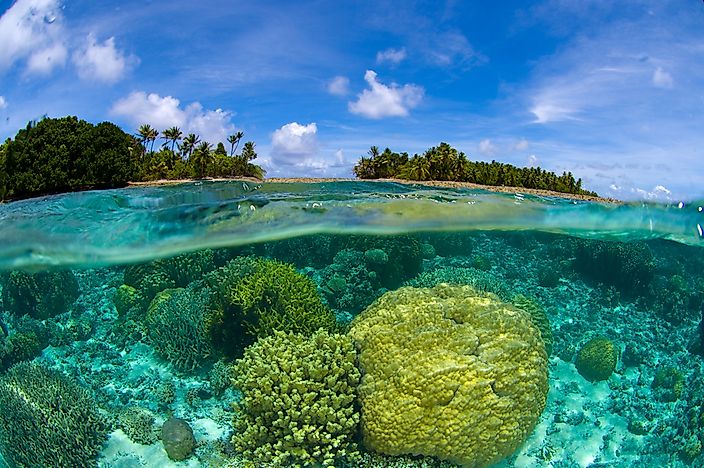
    The Marshall Islands, which is officially called the Republic of the MarshalI Islands, is an island country that can be found in the Pacific Ocean, approximately halfway between the US State of Hawaii and the continent of Australia. It is considered to be part of Micronesia. The area surrounded the islands are incredibly biodiverse, and include over 800 species of fish as well as 160 of coral. The area around the Marshall Islands also hosts a number of shipwrecks. With 181 square kilometers, the Marshall Islands are the world's seventh smallest country.

    6. Liechtenstein - 160 km²

    A German-speaking country, this is the only nation in the world to be completely located in the Alps. Located between Switzerland and Austria, Liechtenstein is the richest country in the world by GDP per capita, with the lowest unemployment rate (1.5%). Getting into the country is a little tricky, as there is no airport within its borders. Visitors must go through Switzerland's Zurich Airport to reach this Alpine country that's still ruled by a prince! With 160 square kilometers, Liechtenstein is the world's sixth smallest country.

    5. San Marino - 61 km²

    Surrounded completely by Italy, San Marino is also known as the Most Serene Republic of San Marino. With a total of 61 square kilometers, it is the fifth smallest country in the world. it claims to be the oldest surviving sovereign state in the world, and is also one of the wealthiest in terms of GDP per capita. The 3rd smallest country in Europe, it has a population of only 30,000, boasting of one of the lowest unemployment rates in the world.

    4. Tuvalu - 26 km²
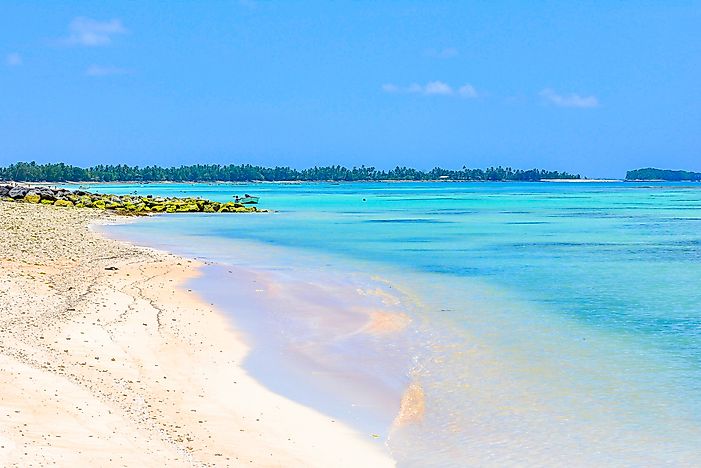
    Formerly known as the Ellice Islands, Tuvalu is located in the Pacific Ocean northeast of Australia. With a total of 26 square kilometers, Tuvalu is the fourth smallest country in the world.There are about 10,000 inhabitants, with 8 km of roads, and only one hospital present on the main island. The country was once a British territory but became independent in 1978. Due to the country's location further afield, tourism is not very significant. In 2010, less than 2,000 visitors came to Tuvalu, with 65% of them coming for business.

    3. Nauru - 21 km²

    An island nation located east of Australia, Nauru is the smallest island country in the world. It was known in the 1980s for its booming phosphate mining but is now a quiet island off the radar of tourists. Formerly known as Pleasant Island, its phosphate resources are now depleted, leading to a 90% national unemployment rate, with the remaining 10% employed by the government. Nauru is also known as the country with the most obese people in the world, with 97% of its men and 93% of women being obese or overweight. Because of this, Nauru is also home to the world's highest level of type 2 diabetes, with 40% of its population suffering from the ailment. Nauru has a total of 21 square kilometers, which makes it the world's third smallest country.

    2. Monaco - 2 km²

    Located on the French Riviera, Monaco is home to the largest number of millionaires and billionaires in the world per capita. It is also the world's second smallest country, with only 2 square kilometers in total land area. Known for its gambling and luxury goods and services industry, Monaco is a favourite playground of the rich and famous. Bordered by France on three sides and on one side by the Mediterranean Sea, the residents of Monaco are mostly French-speaking. With a population of over 36,000, Monaco is the world's most densely populated country. The most popular annual event is the Formula 1 race, with tracks passing through the city streets.

    1. Vatican City - 0.44 km²

     The world's smallest country is the Vatican, also known as the Holy See. With only 0.44 squared kilometers, Vatican City is the world's smallest country by land area. This country fits entirely within the Italian capital city of Rome, and is the center of the Catholic Church. It is also home to the biggest church in the world – St. Peter's Basilica, which holds some of the most significant art works of the Renaissance such as The Pieta and the Creation of Adam. Its income comes from the voluntary contributions of over 1 billion members of the Roman Catholic Church around the world. The remainder of its economy comes from the sales of postage stamps, tourist mementos, and admission fees of museums.
    The World's 50 Smallest Countries

    RankCountryArea (km sq)Area (sq mi)
    1Vatican City0.440.17
    2Monaco2.020.78
    3Nauru218.1
    4Tuvalu2610
    5San Marino6124
    6Liechtenstein16052
    7Marshall Islands18170
    8Saint Kitts and Nevis261101
    9Maldives298115
    10Malta316122
    11Grenada344133
    12Saint Vincent and the Grenadines389150
    13Barbados431166
    14Antigua and Barbuda443171
    15Seychelles455176
    16Palau459177
    17Andorra468181
    18Saint Lucia606234
    19Singapore687265
    20Micronesia702271
    21Tonga717277
    22Dominica751290
    23Bahrain765295
    24Kiribati811313
    25Sao Tome964372
    26Comoros1,862719
    27Mauritius2,030784
    28Luxembourg2,586999
    29Samoa2,8211,089
    30Cape Verde4,0331,557
    31Trinidad and Tobago5,1281,980
    32Brunei5,2652,033
    33Cyprus9,2413,568
    34Gambia10,0003,861
    35Bahamas10,0103,865
    36Lebanon10,2303,950
    37Jamaica10,8314,182
    38Qatar11,5864,473
    39Vanuatu12,1894,706
    40Montenegro13,4525,194
    41East Timor14,8745,743
    42Swaziland17,2046,643
    43Kuwait17,8186,880
    44Fiji18,2747,056
    45Slovenia20,1517,780
    46Israel20,3307,850
    47El Salvador20,7218,000
    48Belize22,8068,805
    49Djibouti23,1808,041
    50Macedonia25,4339,820